How to Complete Three Leaps in Two Years?
Meeting OpenMind and Teacher Yang, I am undoubtedly fortunate. From student to instructor, from building an economics knowledge system to using AI programming to build an ecological prototype, sharing my growth journey and three important leaps at OpenMind over two years.
How to Complete Three Leaps in Two Years?
Meeting OpenMind and Teacher Yang, I am undoubtedly fortunate.
The word "fortunate" is not a compliment, but more a true reflection of the real world.
To this day, I still remember the fortunate beginning: at the end of 2022, I participated in the first pilot of personal development consulting, and I happened to be the 100th registrant. OpenMind gave me a copy of Teacher Yang's "Life Patterns", two or three sets of physical cards, and two or three boxes of human nature cards.
At that time, I was experiencing workplace burnout, unsure whether I should quit or which direction to take in the future, almost entirely consumed by stress and internal struggle 24/7.
That small stroke of luck in life provided me with sufficient comfort and compensation in that context.
It was precisely because I always remembered this small bit of luck that I chose to learn at Zaihui during the turbulent periods of changing cities and career transformation in 2023 and 2024.
I hope to use the tranquility of learning to counter the various upheavals and uncertainties in work and life. I also hope that stroke of luck remains.
It turns out that luck is still present.
At the end of 2023, I learned the first "Reading Methodology Training Camp", mastered how to systematically learn a new discipline through self-study, such as economics, and became an outstanding student. From this point on, I began my leveling up journey at OpenMind.
In one year, I grew from a student to an outstanding student, from an outstanding student to a teaching assistant, and from a teaching assistant to a course lecturer and reading coach, and received the Ruolan Scholarship·Community Contribution Award at the end of 2024.
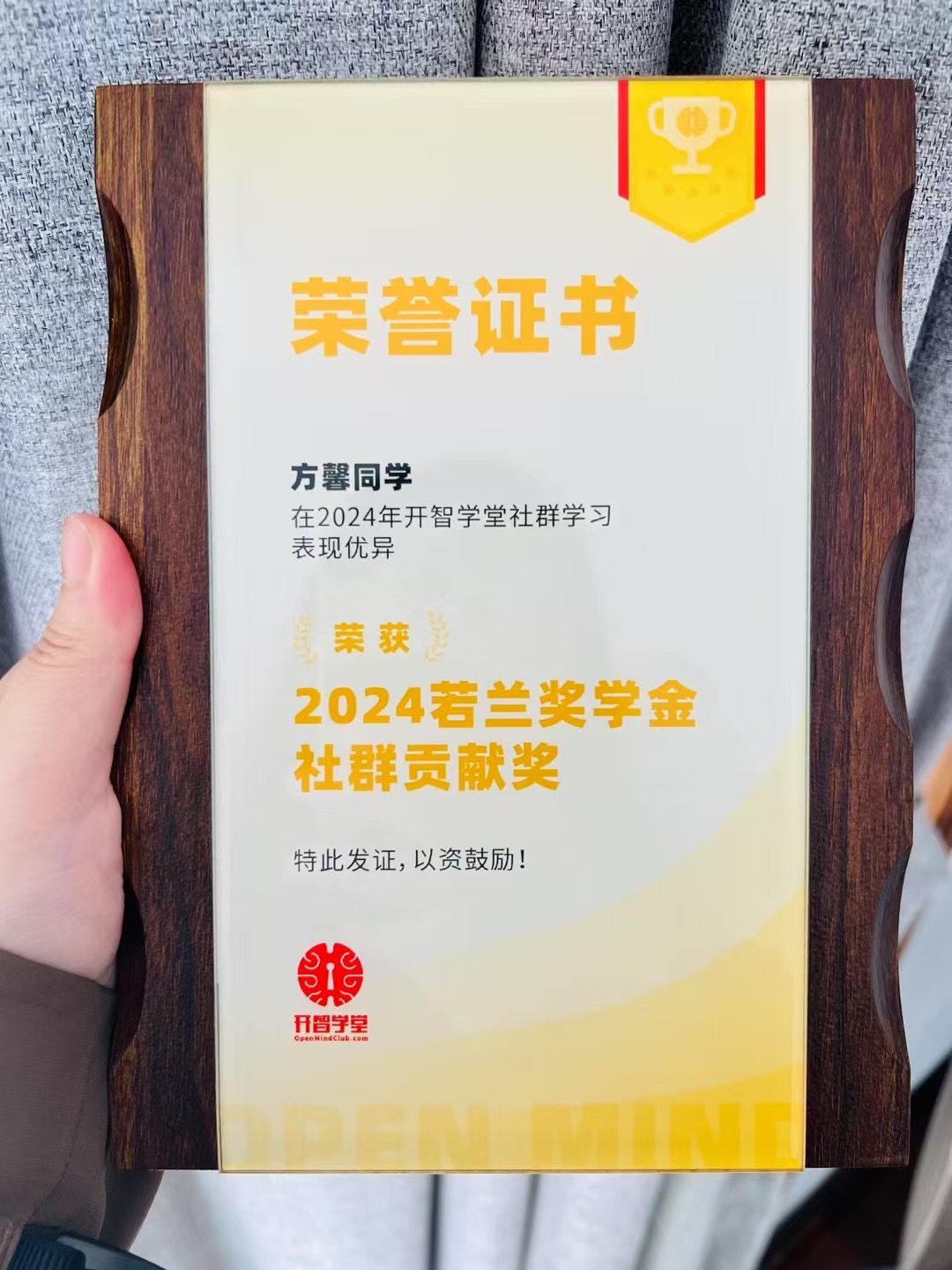
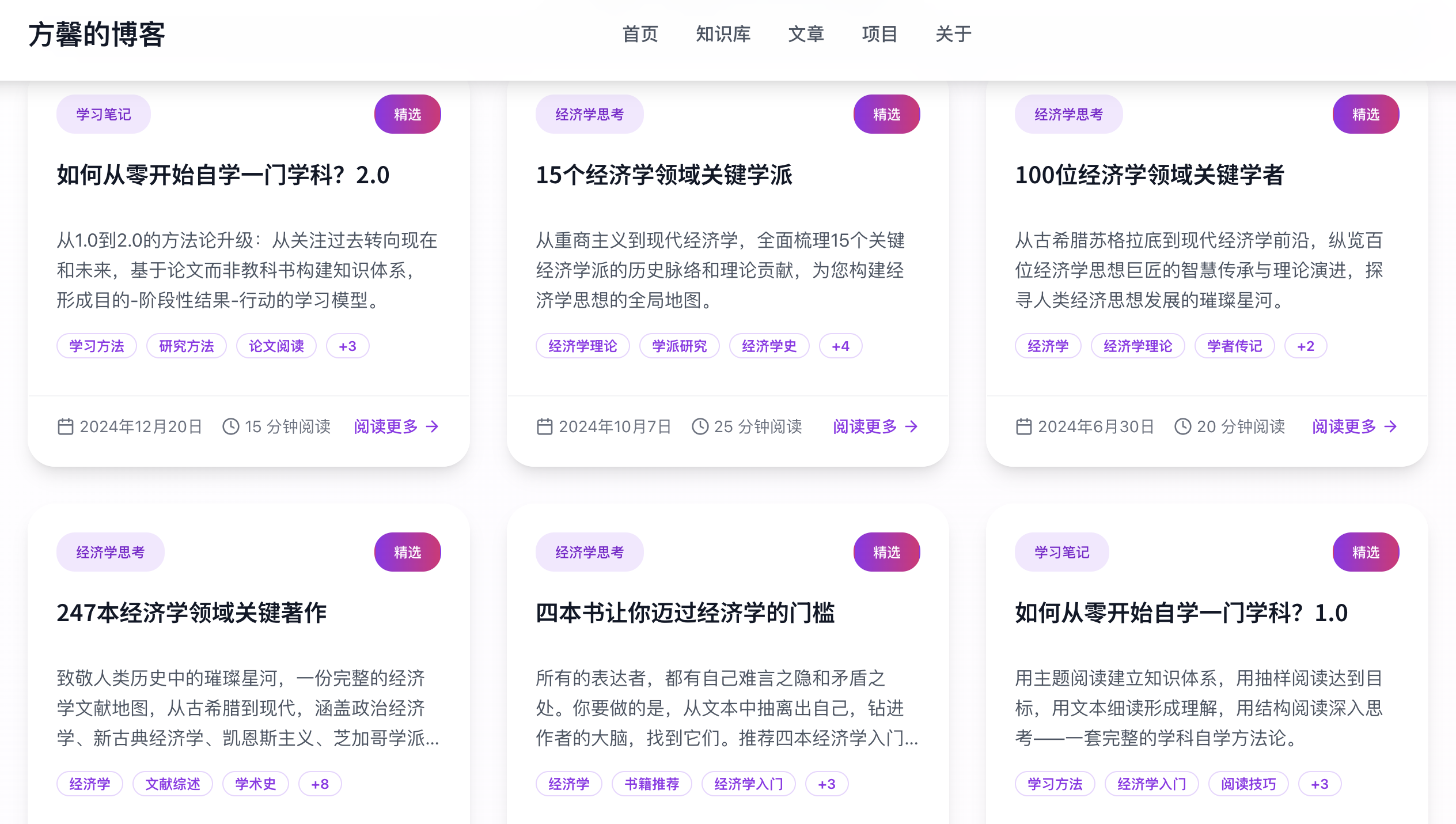
During this period, I also iterated my economic knowledge system from version 1.0 to 2.0, organizing "247 key works in the economics field", "100 key figures in the economics field", "15 key schools in the economics field", with a total reading volume exceeding 18,000.
In the first half of 2025, based on the academic accumulation of the past year, utilizing the knowledge from "AI Programming Course", I built websites such as EconAI (AI expert in academic fields), EconWeb (academic navigation site), and Fang Xin Blog, constructing an ecological prototype that can continuously deconstruct and reconstruct itself alongside my growth.
These works truly allowed me to see the possibility of luck and the future, and to feel the beauty of life immersed in creation.
If you are curious about or interested in my works, I can briefly explain them to you from the following three dimensions:
01 How to build an economics knowledge system from scratch?
How to grow from a student to an instructor in one year?
How to build an ecological prototype with AI programming?
Let's go through this step by step.
How to build an economic knowledge system from scratch?
In early January 2024, I completed version 1.0 of "How to Self-Learn a Subject from Scratch". This was my final project for the first "Reading Methodology Training Camp", and also the beginning of my economic knowledge system and ecological prototype.
This article primarily describes how I learned and mastered economic knowledge from a zero-base stage through methods like text close reading, sampling reading, structural reading, and thematic reading.
For instance, building my own core economic knowledge system through thematic reading and comparing table of contents. Or forming a comprehensive understanding of key figures, key theories, and key works in the economic field through sampling reading.
This global understanding is particularly crucial for beginners. It's like having a universal map when traveling to an unfamiliar place. In the future, you can refer to the routes on the map, making it less likely to go astray, less likely to panic, and less likely to blindly follow others' opinions.
If you are interested in this content, you can click on 《How to Self-Learn a Discipline from Scratch? 1.0》
On December 20, 2024, I completed version 2.0 of 《How to Self-Learn a Discipline from Scratch》. The difference between version 2.0 and version 1.0 is that version 1.0 focused more on the past, while version 2.0 focuses more on the present and future.
In other words, in the 2.0 stage, the most important thing is to find papers and read papers, rather than reading textbooks, academic monographs, and popular science books. Because these translated books have a time gap of 10-20 years, while papers represent the present and can also predict the future.
The possible key works, key figures, and key schools in the field of economics now and in the future will only exist in various data related to papers. For example, the number of paper citations. For example, the number of academic publications. Rather than in textbooks or popular science books.
At the 2.0 stage, the most important thing is to choose papers and read papers.
You need to use the Web of Science (WOS) academic database to download full papers from the top five economic journals, and then use econometric tools to analyze the data. (For specific operational steps, you can learn through the Zhixing "Information Analysis" course.)
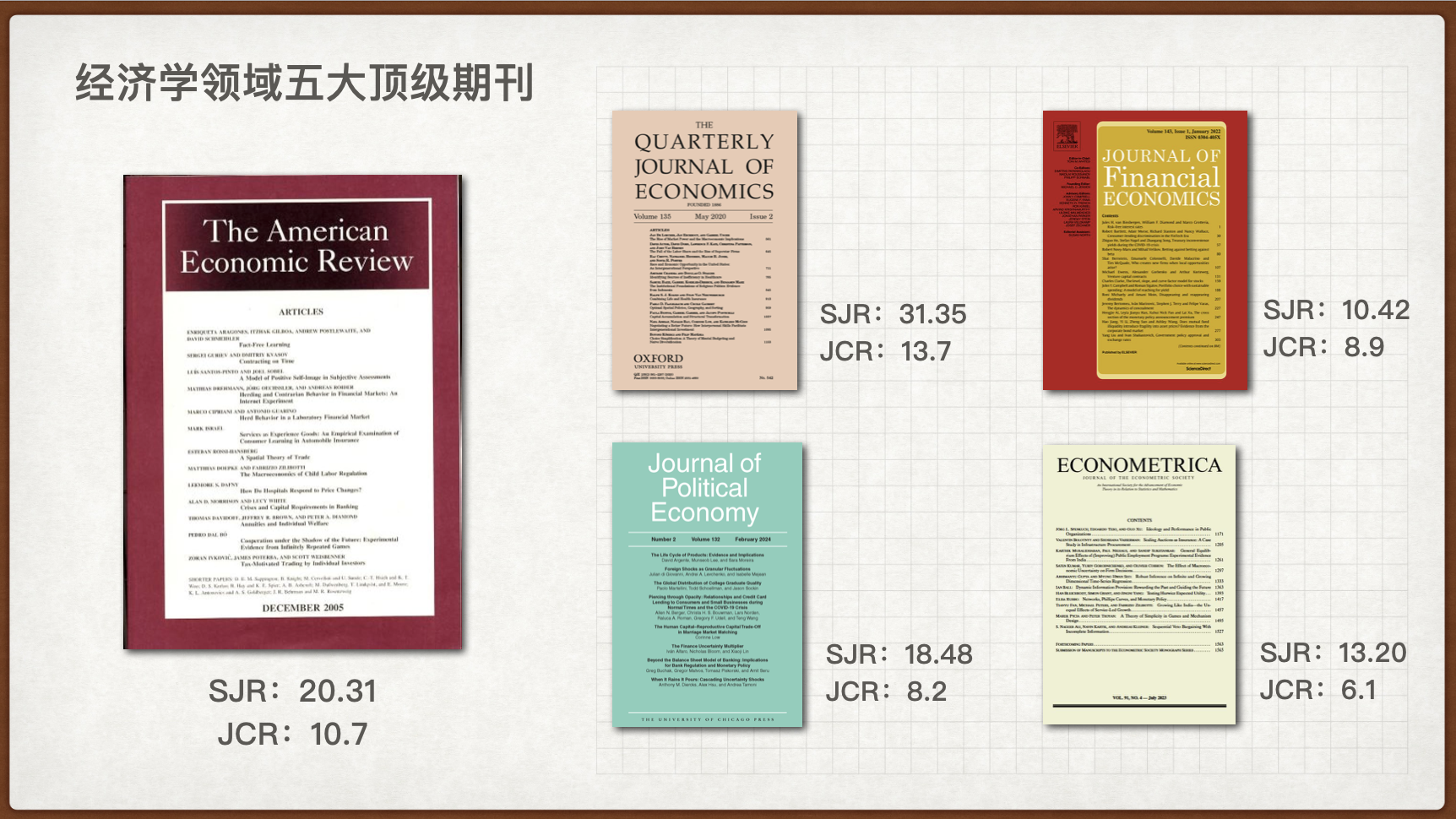
After downloading the papers, you need to classify these highly cited papers by theme. For example, general topics, finance, econometrics, political economy...
I downloaded the top 25 highly cited papers from The American Economic Review. These 25 highly cited papers cover many topics, including those about capital, economic growth, bounded rationality, game theory...
If properly categorized, you can actually create a series of economics textbooks tailored to yourself.
After analyzing to the end, you will find that most papers in top-tier journals are written by a few familiar scholars. They are the key scholars or leading figures in current economics.
After analyzing to the end, you will find that some authors in top-tier journals have limited publication numbers, but have already won various disciplinary awards, such as the John Bates Clark Medal. The future key scholars or leading figures in economics will most likely emerge from among them.
For instance, I once predicted in the "100 Key Figures in Economics" that Daron Acemoglu would become a key figure in the field. I didn't expect this day to come so quickly, just about three months after I wrote that content. He, along with Simom Johnson and James A. Robinson, won the 2024 Nobel Prize in Economics for their "research on how institutions are formed and their impact on prosperity".
In the context of limited time and energy, reading their papers is the most cost-effective thing to do. Because you can not only see the past but also glimpse an unexpected future.
Only by seeing what others cannot see can you discover academic, commercial, and career arbitrage opportunities.
Therefore, ultimately, this led to "What arbitrage opportunities exist in the top economic journals of the past century?" "247 Key Works in Economics," "100 Key Figures in Economics," "15 Key Schools of Economic Thought," resulting in Economics Knowledge System 2.0.
So the question arises: among so many key works and key figures, what should one read first?
It mainly depends on what your purpose is.
If you really don't know, start with the thinnest, most familiar, and most recent topics. Spend three months after three months forming a basic understanding of them, and ultimately develop your own knowledge system.
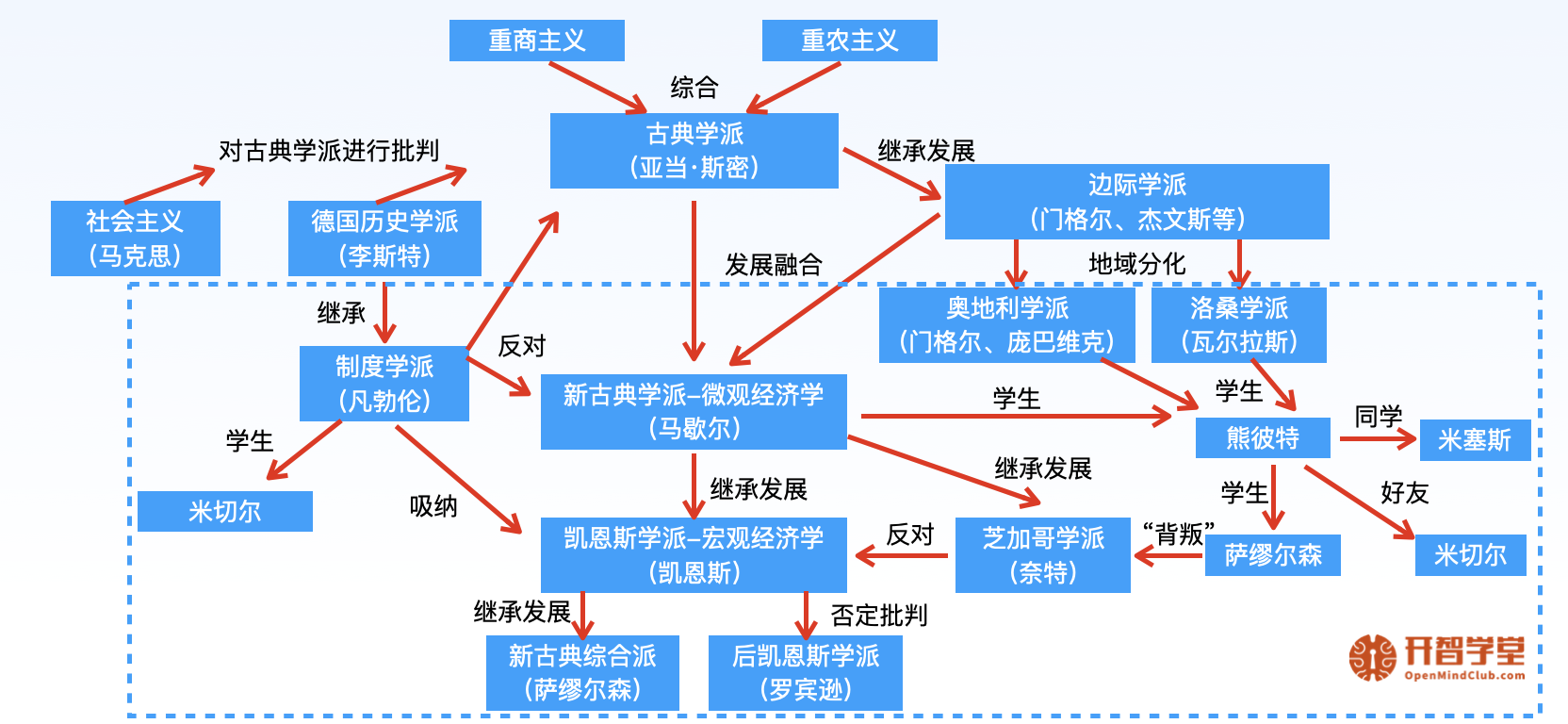
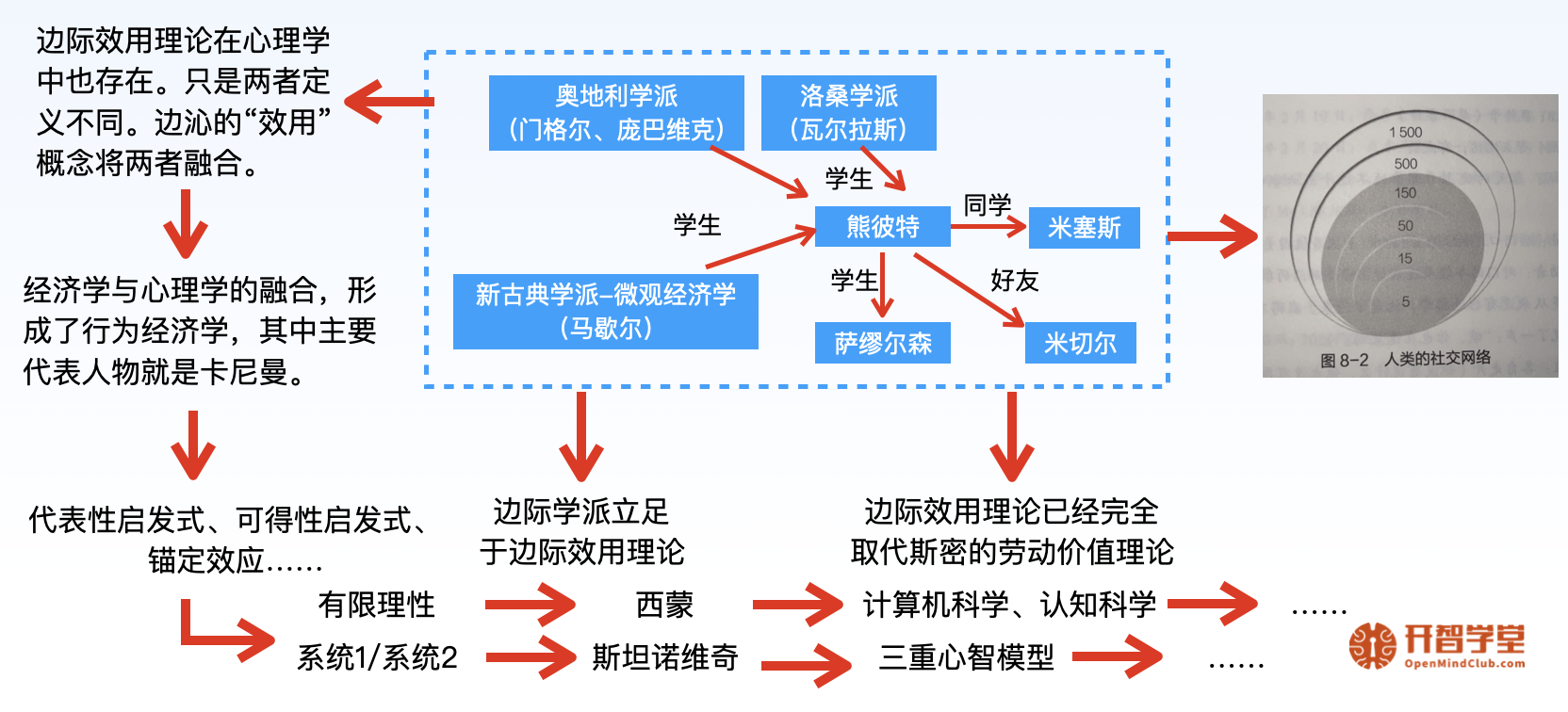
02 How to grow from a student to a lecturer in one year?
Looking back on the path I've traveled, the core is two principles and one action model in transforming from a student to a lecturer within a year.
Principle One: Look at things from top to bottom; do things from bottom to top.
What does this mean?
Using my self-study of economics as an example, "looking at things from top to bottom" means first establishing a global understanding of key works, key figures, and key schools in the economics field by systematically examining the table of contents of books on economic principles and intellectual history.
The article "How to Use Systematic Reading Method to Self-Study a New Discipline" is primarily about how I use systematic reading to build a disciplinary global awareness in self-studying economics. For example, constructing my core economic knowledge system through thematic reading and comparing tables of contents. Additionally, forming a comprehensive understanding of key figures, key schools, and key works in the economics field through sampling reading.
What does "doing things from the bottom up" mean?
It means reading some basic books from bottom to top, such as "The Wealth of Nations" or "Das Kapital", and then writing reading notes and other works to gain a deeper understanding and perception of the specific details of a discipline, and to have a clearer understanding of the physical world you inhabit. This perception of details is like using a magnifying glass that makes the world look clearer.
Principle Two: Reading and learning should have purposefulness.
Research has also found that those who view reading as a process of constructive meaning tend to have better comprehension compared to those who view reading as a mere memorization or passive absorption of knowledge.
In other words, if a person reads and learns purposefully, they will have a better grasp of knowledge compared to those who passively input or memorize knowledge. I have deeply experienced this myself.
One of my main purposes in participating in the first "Reading Mastery Course" was to enable myself to learn any unfamiliar field. Therefore, all my actions and efforts outside of the course were related to this goal, rather than just attending classes and doing assignments.
For example, during the course, besides attending classes, doing assignments, and reading "The Smart Reader," I also built comprehensive and concise reading lists for economics on Douban, helping myself form a holistic understanding. I also bought some foundational economics textbooks of similar types to facilitate building a knowledge system by comparing their contents.
Due to my work background and personal preferences, I tend to start from the field of economics, which provides a stronger internal motivation to drive myself to master the course content and develop the ability to learn any new discipline.
Distilling my own experience leads to forming an action model. This model consists of three components: purpose, intermediate results, and actions.
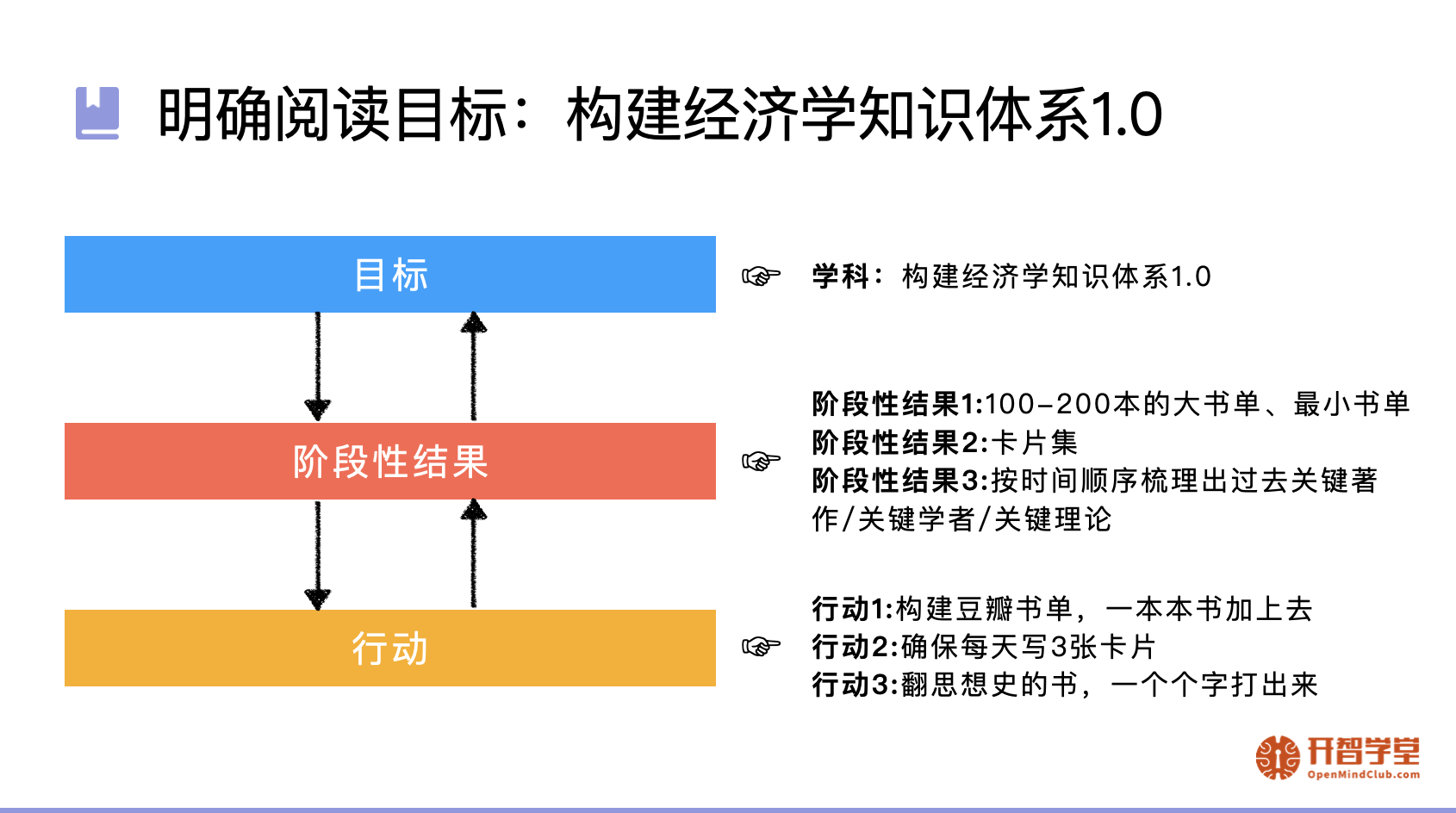
On the surface, this model seems somewhat like OKR.
In essence, there are differences between the two. OKR goals are based on external motivation, which may not necessarily be something you want to do yourself. In contrast, this action model is based on internal motivation, where you have passion and enthusiasm for the purpose, and are willing to do some hard work.
In this model, the top layer is the purpose, which is the result you want to achieve, and all subsequent actions revolve around this purpose. For example, if I want to develop the ability to learn any unfamiliar field, then all subsequent actions I take will be related to this. Or if I want to build a knowledge system for economics, then all subsequent actions I take will be related to this.
The middle layer is the interim result, which means leaving visible traces of the things you have done. For example, a book list you have curated. For example, cards you have written. For example, the knowledge system you have constructed.
The bottom layer is action, which refers to the steps you take to achieve stage-specific results. For example, if you want to create a reading list, you would first open Douban, then create a new book list, search for relevant books, and finally save those books to the corresponding list. These are the kinds of sequential actions involved.
After taking a series of actions, you'll discover that you are one step closer to the first interim result. And when you complete the first interim result, you'll find that you are one step closer to the ultimate goal.
Eventually, you will also discover that you have entered a positive cycle.
Here's another example.
For instance, I want to build an economic knowledge system 2.0.

Compared to 1.0, 1.0 represents the past, while 2.0 focuses more on the present and future.
The top layer is the purpose, which is the result one wants to achieve, and all subsequent actions revolve around this purpose and result. For example, building an economic knowledge system 2.0.
The middle layer is the staged result, which means that all the things you do around your purpose should leave something visible to you. For example, create a list-style article that sorts out current and future key works, key scholars, and key theories in chronological order. For example, use an article to clearly answer: Where do the core knowledge systems of economics originate? What unique discourse system does it have? What is the secondary discourse system of economics? How do other disciplines or fields view the major issues in the field of economics?
The bottom layer is action, which is the actions you take to complete the staged results.
For instance, to sort out current and future key works, key scholars, and key theories in chronological order, I will find paper data from five top economics journals, use quantitative analysis software to analyze current key works, key scholars, and key theories, as well as potential future key works, key scholars, and key theories, and then organize them into a comprehensive list-style article.
In the process of sorting out key works, key scholars, and key theories, you will see various classic books and classic papers, and write various note cards. Through these, you will naturally form a deeper understanding of economics and naturally complete the second staged result, ultimately forming your economics knowledge system 2.0.
In essence, everything revolves around achieving one's own goals. Do not waste time on things unrelated to and providing no help towards your objectives. Such actions are purely a waste of time. In fact, during a certain period, I removed TikTok, Little Red Book, Weibo, and even closed the short video and "Look" sections in WeChat, all to maintain sufficient focus.
Therefore, ultimately, these two principles and one action model are for a single purpose: to keep oneself sufficiently focused on the goal.
03 How to Build an Ecological Prototype Using AI Programming?
On June 13, 2025, EconAI (AI experts in the academic field) officially went online. On June 14, 2025, EconWeb (academic navigation site) officially went online. On June 23, 2025, Fang Xin's blog officially went online......
Three websites, from idea to final launch, each took only one day. To be precise, the first version of the webpage was generated using AI in less than 5 minutes, with the remaining dozen hours spent adjusting various bugs and perfecting functionalities.
The success can be attributed to two factors: the increasingly powerful programming capabilities of AI, and the personal growth from studying AI Programming Course from phase two to phase four, experiencing various setbacks, continuously reviewing and summarizing, and adjusting actions accordingly.
For example, as a programming novice, directly building a web application with "frontend-server-backend" architecture is a significant pitfall, as its complexity is not beginner-friendly and can lead to a strong sense of frustration. As a programming beginner, it's best to avoid using servers when possible, leverage AI APIs, and simplify processes to create a positive feedback loop with new technologies.
For instance, when communicating with AI or computers, it's crucial to communicate in a way they can understand, explaining one's intentions step by step and clearly, rather than using a chaotic and vague communication style that forces them to guess or interpret the intent. Otherwise, misunderstandings can easily occur, resulting in outputs vastly different from the desired outcome, potentially requiring bug-fixing time that far exceeds the effort of having AI regenerate the content.
If you don't know whether you can output language that a computer can understand.
Let's think about a question: If you want a computer to help you cook instant noodles, how would you instruct it, and how would you communicate with it?
Here's how I would communicate with it:
Step 1, tear open the instant noodles packaging.
Step 2, take out various seasoning packets.
Step 3, take out the instant noodles and place them in a bowl.
Step 4, open a bottle of mineral water.
Step 5, pour the mineral water into the pot.
Step 6, boil water until it is bubbling.
Step 7, pour the instant noodles from the bowl into the boiling water.
Step 8, tear open the various seasoning packets and pour them into the pot.
Step 9, wait for 7 minutes.
Step 10: pour the cooked instant noodles from the pot into the bowl.
How do you feel about this communication method?
If you agree, then the output from a computer would certainly be unsatisfactory. This communication method is a way of communication between people, not between humans and computers.
Computers prefer language like "if\_then\_" and digital languages like "0 and 1".
If you want to cook a bowl of instant noodles, here's how a computer would understand it:
Step 1: Determine if the pot exists
Step 2: If the pot is confirmed to exist, further confirm if the pot is clean; if the pot is confirmed not to exist, first find a pot
Step 3: If the pot is confirmed to exist and clean, add clean water to the pot; otherwise, you need to first find a clean pot or clean the pot, and then add clean water to it
Step 4: Determine if instant noodles exist
Step 5: If instant noodles exist, tear open its outer packaging; if instant noodles do not exist, first find the instant noodles
Step 6: Turn on medium heat and boil the water in the pot to 100 degrees Celsius
Step 7: After the water in the pot boils to 100 degrees Celsius, add the instant noodles; otherwise, do not add them
Step 8, wait for 7 minutes, and make sure to stir the instant noodles with chopsticks once every minute to ensure even heating
Step 9, check if the seasoning is present in the instant noodle bag
Step 10, if the seasoning exists, tear open the seasoning packet and pour it into the pot; if the seasoning is not available, find salt, chili, or other condiments as a substitute
Step 11, reduce the heat from medium to low, simmer for 1 minute, and stir the instant noodles with chopsticks to ensure the seasoning is well absorbed
Step 12, determine if the instant noodles can be broken with chopsticks, turn off the small fire, and start eating; otherwise, continue cooking on low heat for 1 more minute.
Therefore, when communicating with AI and asking it to generate a webpage, we need to clearly tell it which specific language and style to use, and where it can exercise creative freedom.
For example, if I want AI to help me generate a Fang Xin blog, I need to tell it:
1. Technology stack: Use pure Next.js + HTML + TailwindCSS to build it.
2. Core Functionality: I want to create a multi-dimensional Fang Xin blog website that writes both academic professional articles and learning notes, project shares, and personal essays. The website should support multi-category article displays. Projects can be linked to website links, article displays should include publication time and tags, with recommended related articles at the end, and readers can also interact in the comment section.
3. Functional Areas: You should have a header, hero area, article category navigation, tag filtering component, project sharing module, about me section, email subscription, and footer. Categories include: Academic Reflections, Learning Notes, Project Shares, AI Observations, and Personal Essays. The website's copyright owner is Fang Xin Blog, contact email fangin1230@gmail.com, with the year 2025.
4. Website Copy: The website title is "Fang Xin Blog", with the subtitle "Building an Ideal Utopia through Words and Code". Please generate professional and warm Chinese copy for each page. Write a personal introduction for the About page (loving academic exploration, technological innovation, and writing). SEO keywords include: Fang Xin Blog, personal website, intelligent projects, website development.
5. Website Style: The overall style references the Apple website, with a modern and minimalist approach, clear typography, ample white space, and a color palette that is simple and elegant, with subtle purple accents. Adaptable to all screen sizes, with smooth page scrolling, and an overall experience that reflects Apple's design sensibility.
Finally, I obtained a fairly satisfactory personal blog webpage.
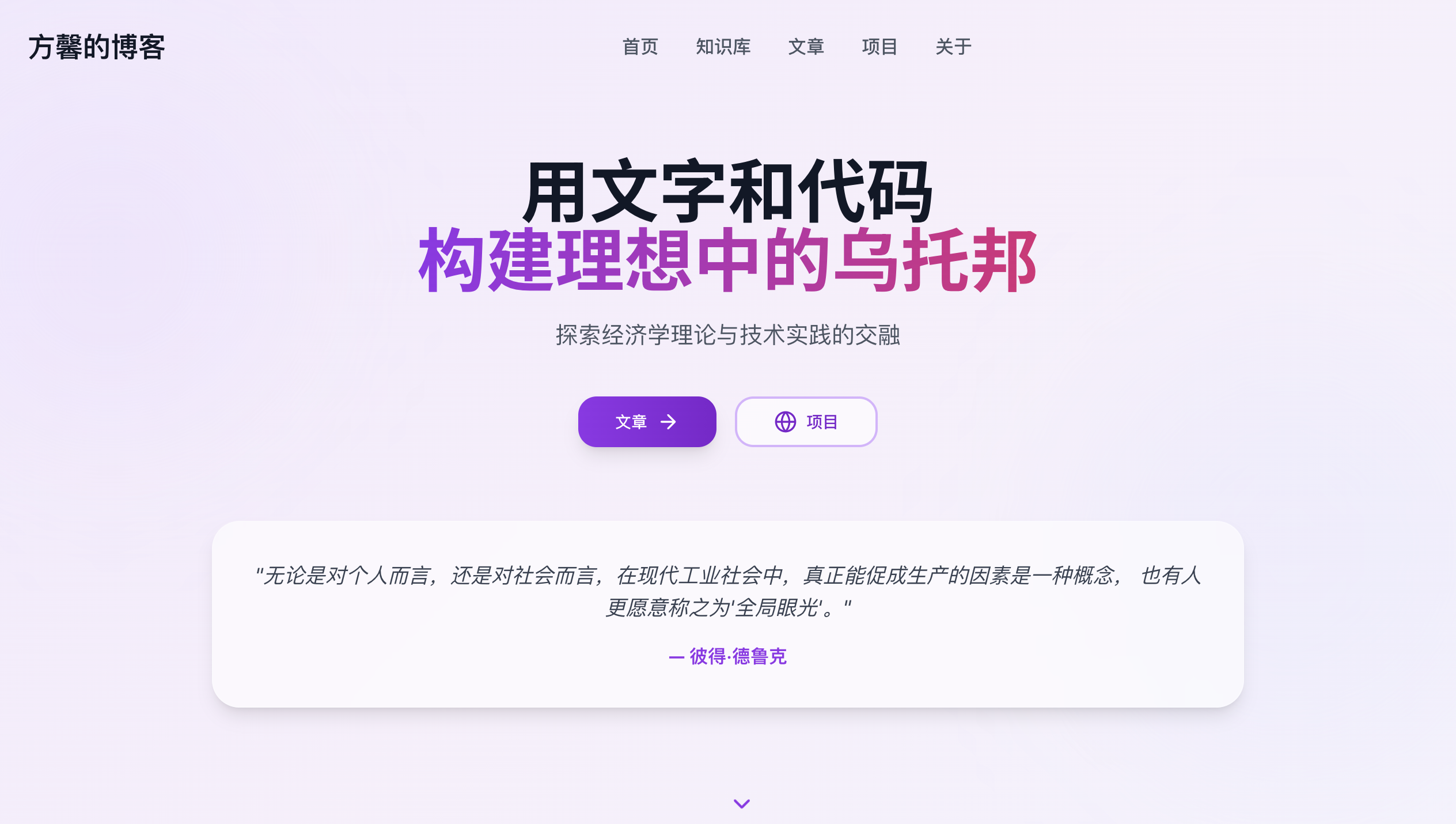
After establishing the basic webpage, the next step is to continuously improve the content and add more features, such as publishing past articles, embedding AI, supporting historical record saving, supporting markdown export, supporting multi-model comparison...
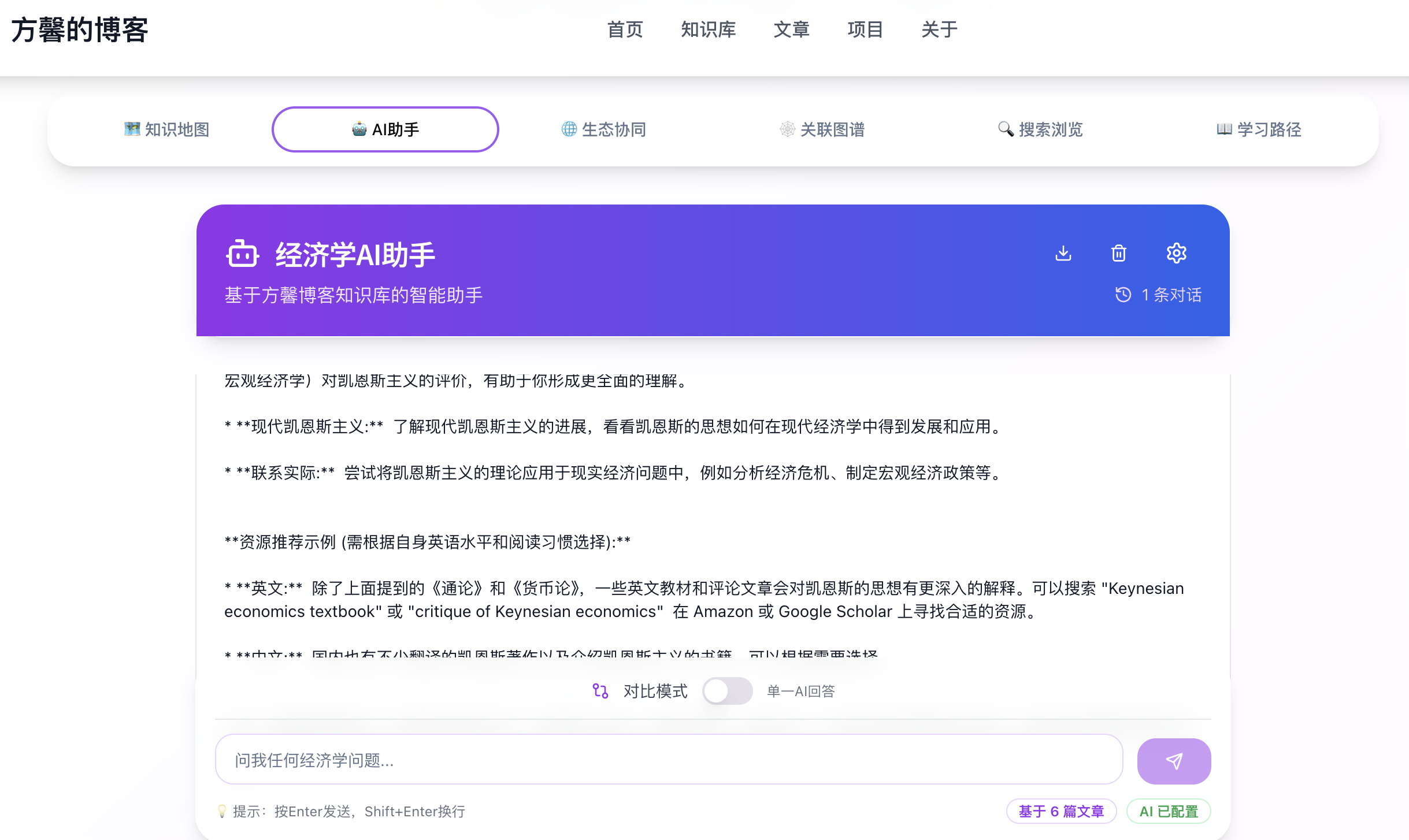
Generating other webpages, such as EconAI or EconWeb, follows the same principle. First, input relevant prompts, telling it which specific language and style to use, and where it can exercise creative freedom:
1\. Tech Stack: Use pure HTML + Next.js + TailwindCSS
2\. Core Functionality: I want to create an economics knowledge base website that can dialogue with AI large models, where users can upload economics-related documents or directly input economics-related content in the chat box. By clicking the dialogue button, they can view relevant economic content output by large models. For example, if a user asks about Kahneman's core viewpoint, ChatGPT, DeepSeek, Gemini, and other large models will provide their own results, ensuring the model's output is professional, high-quality, and encourages users to continue using this tool.
3\. Function Areas: You should have a complete header, Hero Section, and "How It Works" area. The website's copyright owner is Fangxin, contact email fangin1230@gmail.com, year 2025. Other content needs to be written professionally and authentically.
4\. Website Copy: All website copy content should be in English. Regarding this AI website, you need to emphasize that we are a knowledge base focused on the economics field, with sufficiently professional AI tools.
5\. Website Style: The website's color scheme and style should be modern, high-end, and minimalist, similar to the ChatGPT official website. The website needs to be adaptive to various screen sizes.
And continuously fix bugs and improve various functions, ultimately obtaining a fairly satisfactory website.


With AI, technology begins to become accessible, which is a dividend of the era and an opportunity for every ordinary person.
As long as one learns to use AI to build a website, there will be a second, a third... ultimately naturally building one's own ecosystem, and even generating more creativity, ideas, and opportunities, opening up more possibilities for oneself.
Conclusion
Teacher Yang once said, "Transforming one's fate is not an easy task. Understanding oneself, optimizing circumstances, and taking immediate action will ultimately lead to a continuous stream of good fortune."
I hope we can all focus on ourselves, optimize our circumstances, maintain our actions, engage with the world through our work, and welcome a continuous flow of good fortune in the process of creation.
Related Articles
At 30: Building My Utopia with Words and Code
From writing to programming, from career transition to independent entrepreneurship, sharing how I've been building my ideal utopia through AI technology and investment at the age of 30.
How to Complete Three Leaps in Two Years?
Meeting OpenMind and Teacher Yang, I am undoubtedly fortunate. From student to instructor, from building an economics knowledge system to using AI programming to build an ecological prototype, sharing my growth journey and three important leaps at OpenMind over two years.
Four Books to Help You Get Started in Economics
All expressers have their own secrets and contradictions. What you need to do is detach yourself from the text, delve into the author's mind, and find them. Recommended four essential economics introductory books.